
Why Envirolympics exists
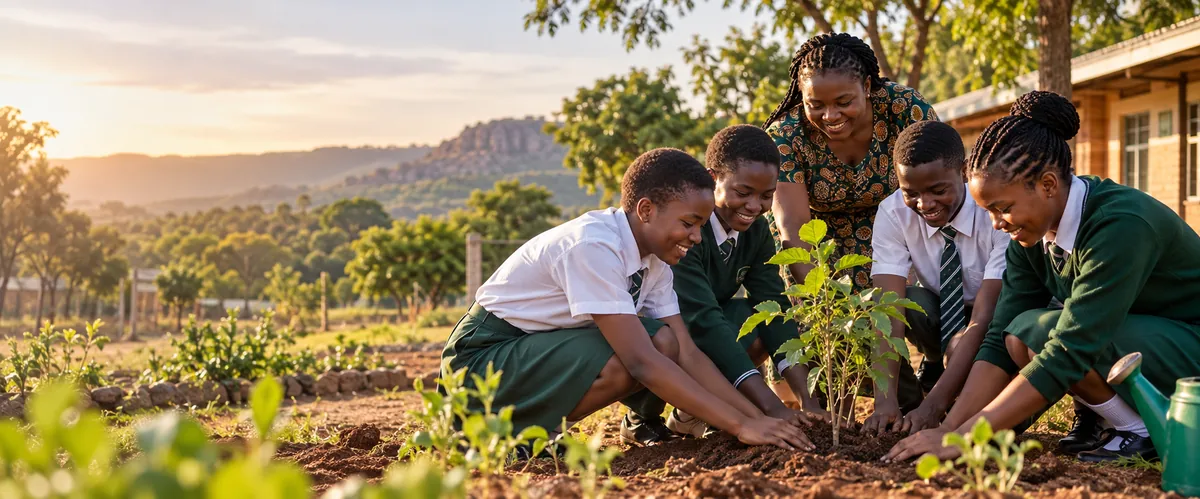
Envirolympics is a proposed national school-based initiative envisioned by Heal A Soul Foundation (HASF) to transform environmental learning into sustained, measurable action. Students and teachers identify local challenges, implement safe projects, document outcomes and share what they learn.
Official Envirolympics identity
Nurturing Healthy Lives Through Environmental Stewardship is the tagline shown on the official Envirolympics logo. The mission is to make every school an environmental action centre, every student a steward and every project a measurable contribution.
From a festival to a year-round learning model
The five-pillar model puts year-round educational stewardship first. School, district, provincial and national Envirolympics events may recognise verified projects, student innovation and learning once agreed and scheduled; festivals are not the whole initiative.
A clear distinction between a framework and an active rollout
The program structure described here is a proposed implementation model. Published pages do not imply that every school has joined, that competitions are open or that government agreements have been finalised.
The five connected pillars
Environmental Education
Practical knowledge of climate change, conservation, waste, water and energy.
Explore this areaStewardship Programs
Ongoing environmental themes managed by school clubs and teacher coordinators.
Explore this areaSchool-Based Projects
Specific student-led activities with plans, responsibilities and measurable results.
Explore this areaMeasurement & Recognition
Document evidence, assess results, report digitally and recognise schools through Envirolympics.
Explore this areaCarbon-Impact Assessment & Potential Carbon Finance
Where appropriate, estimate climate impact; separately explore eligibility for verified credits.
Explore this areaPolicy alignment, subject to Ministry guidance
- Zimbabwe Vision 2030: green skills, youth innovation and sustainable communities.
- Heritage-Based Curriculum 2024–2030: practical, locally relevant school learning, subject to Ministry approval.
- Climate education, Sustainable Development Goals and UNESCO whole-school greening approaches.