
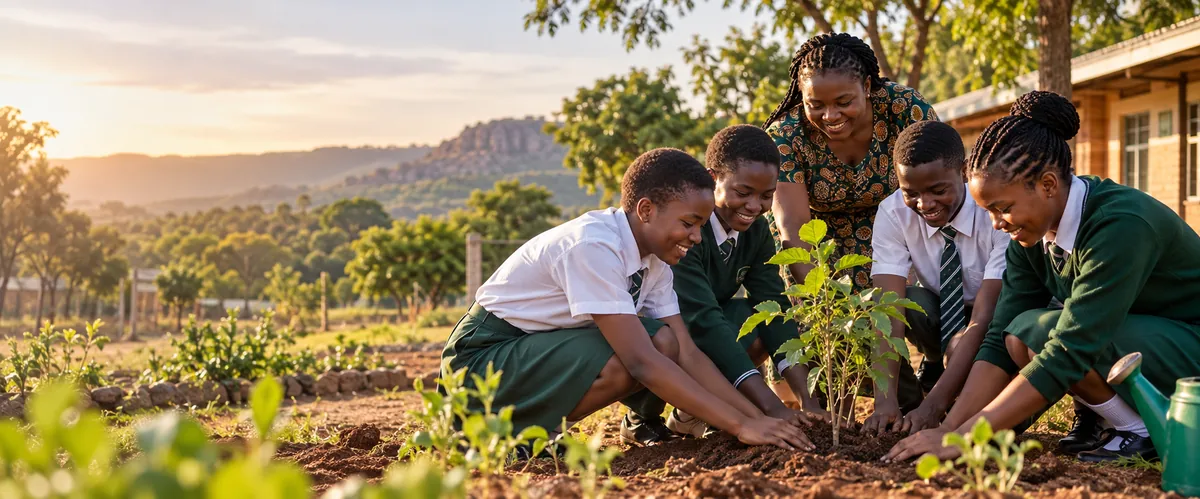
Designed to support teachers, not add unnecessary burden
Environmental stewardship can strengthen science, geography, agriculture, citizenship and practical learning. School activities should begin with manageable projects and clear adult oversight.
For school leaders
Review suitability, staff oversight, local safety issues and consent requirements.
Explore this areaFor teachers
Use eco-clubs, project logs and simple observation methods to support learning.
Explore this areaFor students
Explore local environmental needs, solve problems responsibly and work in teams.
Explore this areaWhat a school would need to begin
Under the proposed model, each participating school would register once authorised, nominate a teacher coordinator, establish a supervised Envirolympics Environmental Stewardship Club, establish project baselines and select two or three locally relevant programs. Specific enrolment requirements depend on Ministry and school approvals.
Safeguarding and student data
No child should submit personal information or identifiable media through an unapproved registration page. Any future learner-facing reporting process will require clear parental or guardian permissions, defined retention rules and appropriate role-based access. Read the safeguarding approach.
The six-step school cycle
- Establish a club: Register the school when authorised, nominate a teacher coordinator and organise supervised student teams.
- Assess local needs: Record the starting position for trees, waste, water, energy and local conservation needs.
- Select and approve projects: Choose two or three locally relevant programs; define project plans, responsibilities, safety, resources and measures.
- Implement and document: Carry out school-term activities; record observations, photos and measurements with appropriate permissions.
- Validate outcomes: Use teacher review and selected independent checks to confirm reported environmental results.
- Recognise and improve: Score fairly, showcase achievements, maintain projects and improve the next school cycle.
Activities must be safe, age-appropriate and consistent with school safeguarding and curriculum requirements.