
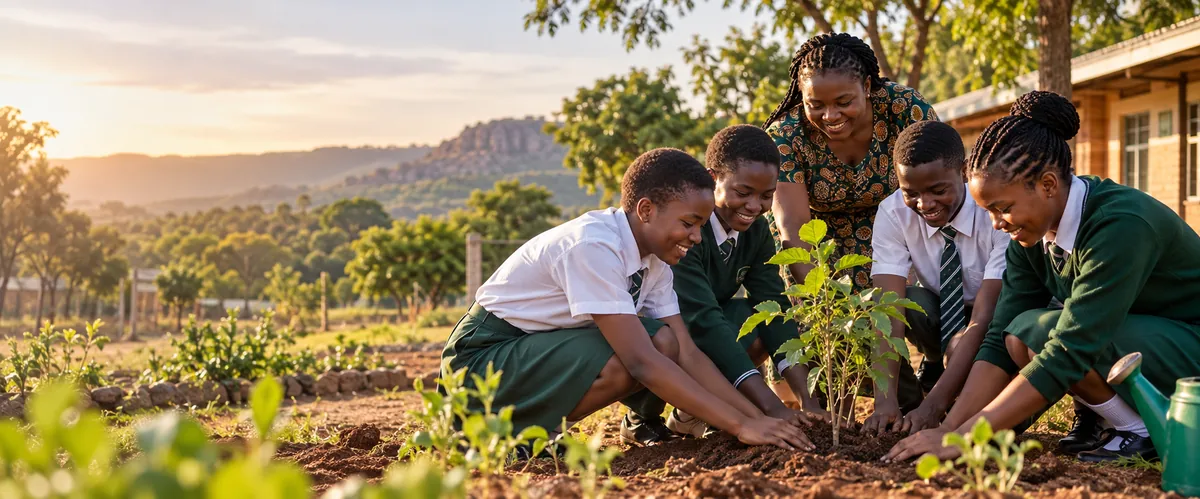
What this program involves
This ongoing stewardship program brings practical environmental education into teacher-supervised school activity. Suggested projects from the October 2026 concept proposal include: School gardens; composting; soil conservation; drought-resilient crops. Each approved project should have a plan, baseline, safe responsibilities and evidence of results.
Possible school activities
- Plan an age-appropriate demonstration or nutrition garden.
- Explore mulching, safe composting and crop rotation.
- Record crop growth and water use through a garden diary.
- Invite local growers or agricultural educators to share practical knowledge.
What schools could measure
- Harvests, compost produced, soil-care practices and student participation.
- Produce harvested where appropriate and documented
- Student learning activities and seasonal observations
How progress could be recognised
Students keep learning records and safe project evidence. Teachers review the records against clear criteria. Recognition can celebrate effort, improvement, teamwork and documented environmental outcomes without equating a badge or competition score with a carbon credit.
From stewardship program to measurable project
A school can run this program throughout the year while choosing specific projects to implement in phases. Example activities: School gardens; composting; soil conservation; drought-resilient crops.
Indicators to record: Harvests, compost produced, soil-care practices and student participation. All reported results require a documented baseline and teacher review.